From Screenshot
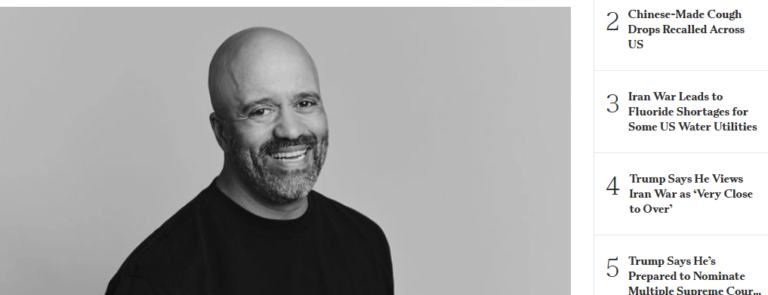
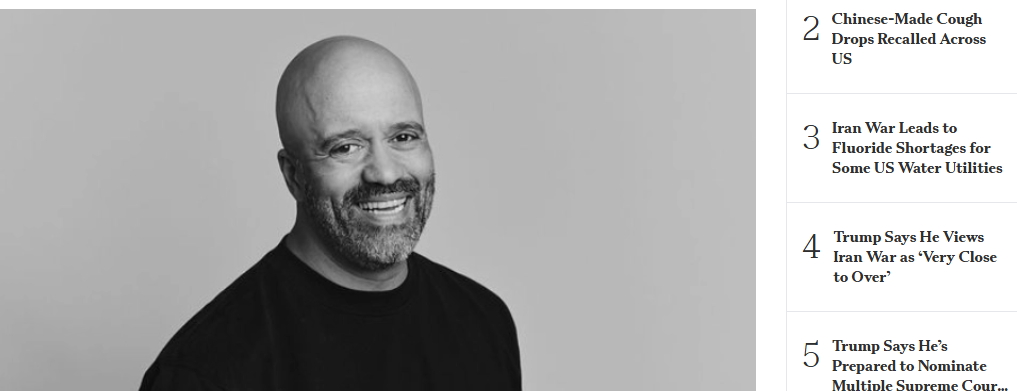
Through his books, social experiments, and creative social media posts, Carlos Whittaker emphasizes compassion, empathy, and seeing the humanity in others, often delivered with a dose of humor. He brings strangers together through kindness, shared stories, and a genuine presence—whether that’s rallying his online community to help someone in need, starting honest conversations that bridge divides, or reminding people to see the human being right in front of them. Rooted in his Christian faith, his mission is to treat others with respect, no matter who they are.
One viral moment in 2021 captured this perfectly. During a layover at an Atlanta airport, Whittaker spotted 66-year-old Tonee “Valentine” Carter playing the piano for tips. Carter was pouring his heart into his music, though most passersby weren’t paying attention. So, Whittaker decided to be fully there for him—he sat down and listened.When Whittaker walked up to put money in Carter’s tip jar, they began talking. He learned that the professional pianist was spending a grueling nine hours a day giving himself dialysis treatment. Moved by his story, Whittaker began to livestream the airport performance to his Instagram followers, asking them to tip generously.Within 35 minutes, $10,000 in donations poured in—which grew into $70,000 within days. It was a beautiful example of the kind of spontaneous generosity Whittaker loves to encourage—the kind that changes lives one story at a time.
This wasn’t a one-off for Whittaker; he keeps coming up with imaginative ways to help people. At Christmastime in 2025, his 20-foot inflatable snowman was damaged. After posting a funny reel about it, his followers unexpectedly donated $800 to his Venmo account to replace it. Someone even bought him a new one. Then, a philanthropic idea crossed his mind: What if everyone kept raising money through his Venmo account, and he would give all the funds to needy families in middle Tennessee where he lives?
His followers—whom he affectionately calls his “Instafamilia”—soon raised $65,000. He posted a video about the families that received the donations: “A single mom who’s been spending $600–$700 a week just to rent a car so she can DoorDash. A family holding their breath, unsure how rent was getting paid this month. Parents who didn’t lose everything, they were just tired of barely holding it together.” Whittaker consistently proves that hope isn’t an intangible fancy—it’s an actionable gift to be given.
Things We’ve Lost Along the Way: Being Human
A former pastor and touring musician, Carlos Whittaker now reaches thousands of people through his musings on and offline. His highly rated podcast, where he often discussed family, faith, and the latest news topics, included guests ranging from his mom to a bipartisan political analyst. Meanwhile, his books “Moment Maker” (2014), “Kill the Spider” (2017), “How to Human” (2023), and “Reconnected” (2024), explored living purposefully, breaking the cycle of destructive habits, how to find the best version of yourself, and the benefits of digital detox.His most recent book chronicled his experiences living screen-free with monks and Amish farmers. He vividly detailed his seven-week-long experiment to detox from the digital world. Whittaker described tangible symptoms of withdrawal (night sweats, panic attacks) and the joys of rediscovering how to live without the burden of technology.What drove him to undertake such a unique journey?
It all began one Sunday in 2022 when Whittaker received his “notification of shame”—that weekly summary of phone use that pops up from features like Apple’s Screen Time or Google’s Digital Wellbeing.“That Sunday, I decided to do the math,” he explained. “I’d been spending seven hours and 23 minutes a day on my phone.” That amounted to over 49 hours a week, and more than 100 days in a year. “If I live to be my dad’s age, 85 years old, I will spend over 14 years of my remaining life looking at my phone,” he said. “That’s when I thought, ‘This was not the way we were created to live.’”Keeping a close eye on his mental health had become a habit for Whittaker. For years, he’d shared his own battles with stress, depression, and anxiety, turning his own experiences into a resource for others who are struggling. So when the screen time numbers stared back at him that Sunday, he realized he needed to do something: He would offer himself up as the “lab rat” to find a better way to live—because if it would help him, he knew it would probably help many others, too.
The Experiment
Whittaker first spent two weeks praying the Liturgy of the Hours with monks at a Benedictine monastery. There, he learned about how they lived a life of silence and contemplation. He then spent two more weeks living on an Amish farm, shearing sheep, tossing hay bales, and discovering what purposeful living felt like. Finally, he brought it all home to live the disconnected life with his own family for three weeks.“Initially, it was just going to be a two-week stay,” he said. “I was going to move to a cabin somewhere, not have a phone or any screens, and just try to live. And I thought, you know what? That’s actually going to make me go insane. The experiment isn’t about going insane. It’s about trying to live without a screen.”
Whittaker then contacted Dr. Daniel Amen, renowned neuroscientist and founder of the Amen Clinics in Los Angeles. Whittaker asked him how long it would take for his brain to change if he went screen-free. The doctor estimated approximately two months. His wife Heather suggested calling a monastery to start his experiment instead. Years before, her father had been a long-serving volunteer with Benedictine monks in the high desert of Southern California. She phoned the monastery and asked to speak with Father Francis. The monk actually remembered Heather as a little girl, running around the grounds with her father. They graciously agreed to let Whittaker stay in a guest cabin for the first part of his journey.
The second part of Whittaker’s venture came about because of an Instagram follower whose husband was formerly part of the Amish community. When he told her about the experiment, she said, “You have to come live with the Amish.” But it wasn’t that easy—he was rejected by several Amish farms before finding one in Ohio that said, “Sure, you can live with us.”For the third and final part of his screen-free journey, Whittaker returned home to Nashville.
This final phase lasted three weeks (including a one-week road trip to Yellowstone National Park). It focused on reintegrating lessons learned from the monastery and the Amish farm into everyday family life—no screens allowed. The result was that he had more thoughtful conversations and a rediscovered wonder in ordinary moments. He documented everything with a film camera—so as not to let digital technology seep in.
To get all the juicy details of his experiment, you’ll have to read the book. But if you want one jaw-dropping spoiler, the biggest revelation came from his before-and-after brain scans. Performed by Dr. Amen, the scans showed dramatic, measurable changes in Whittaker’s brain.“There were definite massive differences in my cognitive memory, in the shape and scope of my cerebellum—all sorts of things that were happening to my brain,” he said. His cognitive memory score went from the 50th percentile to the 99th percentile. This wasn’t a scientifically controlled experiment, but after two months without his phone, “there was only 1 percent of men in America with better memory than me,” he said.
What’s Next
Whittaker recently ended his podcast, telling his audience he wanted to take a pause from the platform and had some “big ideas” in store. One of them is envisioning a community for “people that are feeling all the pressure of AI, and all of the things that are slowly but surely pulling us away from staying human in an inhuman world.” In the meantime, he’s continuing to encourage people “to keep caring when the world keeps breaking.” Everyone knows what he means. And in a way that’s uniquely his, he offered this piece of wisdom in a recent social media post: “The world wants you numb. It wants you stuck. Either outraged at everything or caring about nothing. But tender? Present? Still willing to break open? That’s not weakness. That’s defiance.”
This article was originally published in American Essence magazine. Subsequently published at The Epoch Times.