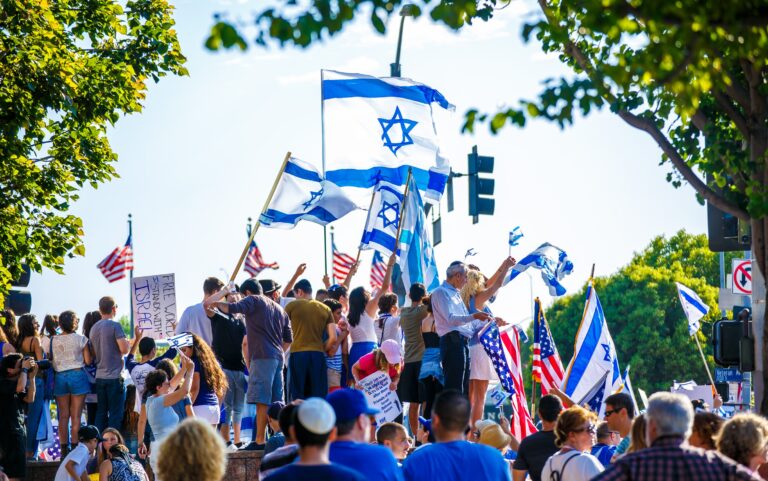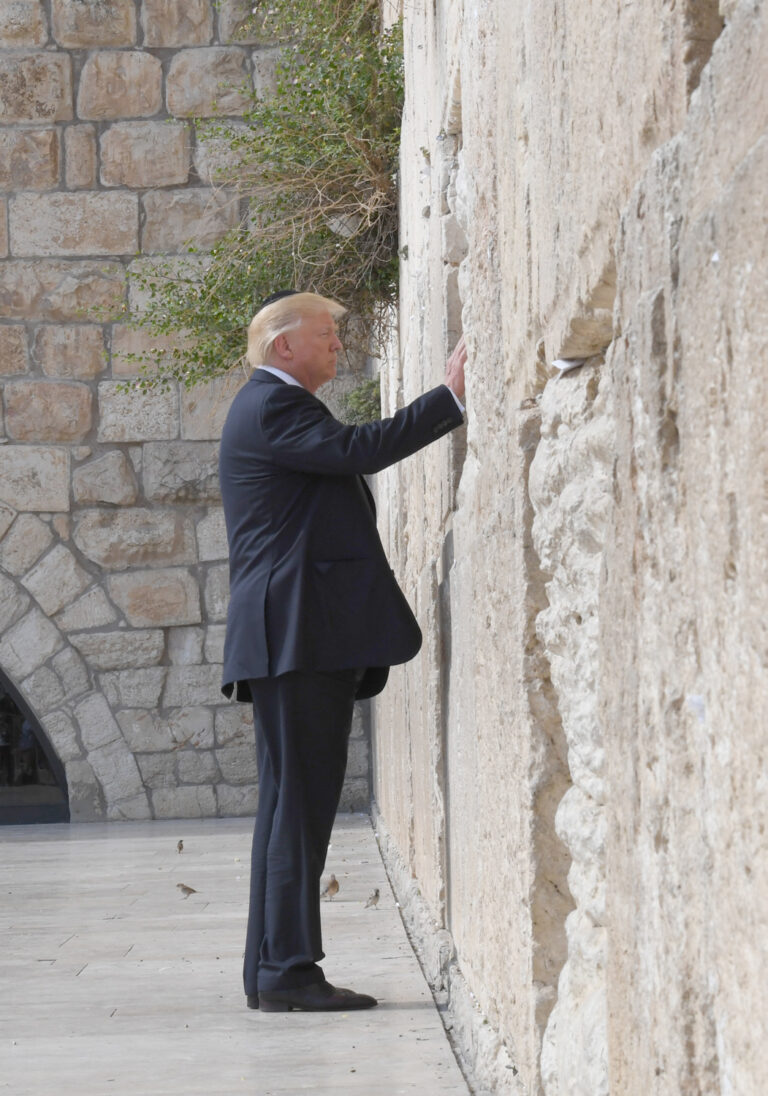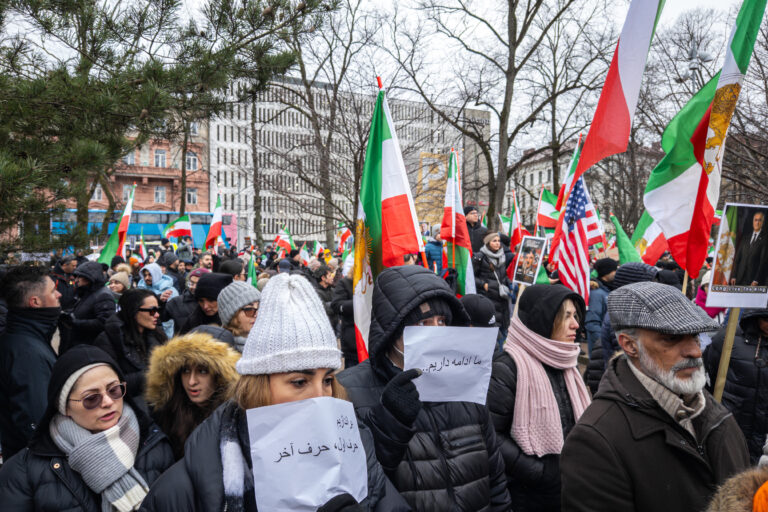
For over a century, Americans, shaped by their historically Judeo-Christian values, instinctively understood the importance of standing with Israel. Embracing a Jewish homeland came naturally as part of their biblical worldview and was bolstered exponentially after the attempted genocide and mass slaughter of the Jewish people in WWII.
Zionism is a word Americans have long embraced. A deep dive of historical newspapers proves it was something they understood and fervently supported.
In the 1890s, Theodore Herzl, a journalist covering the Dreyfus Affair in Paris, witnessed violent riots and crowds chanting anti-Semitic slogans, an experience that crystallized his vision for a Jewish homeland. His seminal work, Der Judenstaat (1896), laid the foundation for modern Zionism, and served as an inspiration to Jews and their allies worldwide. By 1907, it was already clear his vision resonated with Americans – a Washington D.C. headline proclaimed, “For the Cause of Zionism,” reporting on a meeting honoring Herzl’s legacy. Newspapers across the country echoed this sentiment, noting a “constant flow of contributions from rich and poor alike” to unite the Jewish people into “one powerful nation.” (These last two quotes are from the 1907 article, but other newspapers from that time report the same Herzl meetings raising money with the same goal.)
Ten years later came the Balfour Declaration and Britian’s public pledge to establish “a national home for the Jewish people.” Newspaper reports from the period between the two world wars reveal an American populace zealously dedicated to this end.
In 1920, the World Zionist Congress in London created a fundraising entity called Keren Hayesod (which later joined UIA-United Israel Appeal). Soon after, Keren Hayesod was funding Albert Einstein’s 1921 American tour with Zionist leader Chaim Weizmann to raise money for a planned Hebrew University. Einstein told the media that the idea of a Jewish university appealed to him after learning the University of Berlin was refusing to admit Jewish students.
A 1922 newspaper tells us the “Jews of Atlanta” were working with the recently created Keren Hayesod “for the purpose of restoring Palestine as a Jewish homeland.” They explained the organization was raising funds “for restoration of the land that in Bible times flowed with ‘milk and honey,’ but under Turkish rule has diminished in population and has lost many thousands of acres to the wilderness from which it was nursed by the Jews of old after Moses had led them to it.”
By 1927, a full-page article in the Brooklyn Daily Eagle gave the update, “Miracles Wrought by Jews in Ten Years in Palestine.” Written by Herman Bernstein, one of the most consequential journalists of the 20th century, the article asked, “[W]hat prophetic eye could have foreseen the results ten years after [the Balfour Declaration]?” Bernstein documented that money was “contributed or invested from all over the world for the purchase of land … the provision of education, the maintenance of hospitals, the care of immigrants; and all this accomplished with a due regard for the legitimate interests of the Arab population, with a simultaneous increase in their prosperity also…” Christians were especially heartened, as they too saw the fulfillment of Isaiah’s ancient prophecy: “The wilderness and the solitary place shall be glad for them; and the desert shall rejoice, and blossom as the rose.” Even Grok tells us that verse is “often associated with the establishment of the State of Israel due to its imagery of transformation and renewal, which many Jews and Christians interpret as a prophetic vision of the Jewish people’s return to their ancestral homeland.”
Roughly ten years later, during the Arab Revolt of 1936–1939, an American newspaper announced, “Palestine Aid Pleas Continue.” In just one city in upstate New York, it was reported that “hundreds of telegrams” were flooding telegraph offices as “Jews and Christians appealed to Washington to intervene” because Arab revolts “imperiled the last hopes of Zionists for a national Jewish homeland.”
By 1945, after centuries of anti-Semitism in Europe culminated in the murder of six million innocents, Americans doubled down on their support for a Jewish homeland – pledging both their hearts and wallets. In July of that year, nearly 40 U.S. governors sent a personal petition to President Truman asking him to take “concrete measures” in opening Palestine to mass Jewish immigration, assuring the president of the “approbation of the American people” as well as their own individual support and contributions.
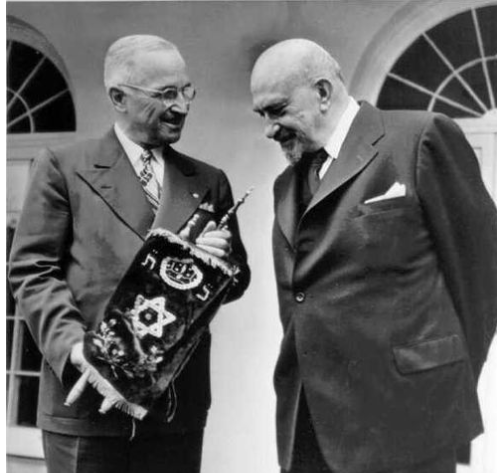
On May 14, 1948, immediately after David Ben-Gurion proclaimed Israel’s independence, U.S. President Harry Truman, a Democrat, officially recognized Israel. In the era before the internet and instant cell phone notifications, Truman astoundingly recognized Israel only eleven minutes after its creation. One reason he did so was “out of a deep conviction, believing that the Jewish people deserved the right to self-determination in their ancestral homeland.” And the rapid recognition was a huge deal: It affirmed Israel’s right to exist, immediately deterred adversaries, and set a precedent for the rest of the world to follow. It also cemented a lasting alliance.
American Jews and Christians were proud to have played such an important role in world history, even as they believed they participated in yet another miracle, another fulfillment of prophecy from the book of Isaiah:
“Shall the earth be made to give birth in one day? Or shall a nation be born at once? For as soon as Zion was in labor, she gave birth to her children.” This view is explained by David Parsons at the International Christian Embassy in Jerusalem, who describes the rebirth of the nation of Israel in 1948 as “an unprecedented act in world history.”
It was just the beginning. People continued to see miracles in Israel’s Six Day War in 1967 as well as the 1973 Yom Kippur War.
By 1975 when the United Nations adopted a resolution declaring Zionism to be “a form of racism and racial discrimination,” Americans were outraged.
Headlines proclaimed “U.N. Zionism Move Draws Storm of Protests.” In New York City, 100,000 people marched against the resolution, blocking traffic from 37th Street to Times Square. In stark contrast to the prevailing sentiment on campuses today, a rally was held at Columbia University in support of Zionism – and decidedly against the United Nations. AP Photos appeared in newspapers across the country showing student protesters using bullhorns to address peaceful protesters holding flaming torches.
With CBN News reporting a surge in “Holocaust denial, Jewish blood libels, and anti-Zionist conspiracy theories” among conservative public figures, it’s critical to reaffirm the historical reasons behind America’s enduring commitment to the Jewish homeland. The responsibility lies with us to preserve the story of our support for her long journey to statehood and subsequent struggles for survival – let’s do so with the clarity and conviction of those who’ve gone before.
Available at The Epoch Times:

SUBSCRIBE TO THE EPOCH TIMES TO READ EXCLUSIVE ARTICLES BY SUSAN D. HARRIS: