All Photos ©Blue Heron Photography, Susan D. Harris
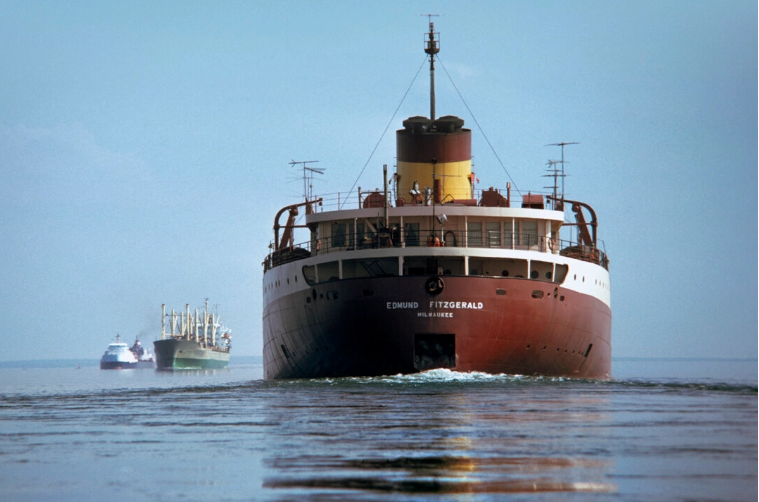
“Lake Huron rolls, Superior sings,
In the rooms of her ice-water mansion.
Old Michigan steams like a young man’s dreams;
The islands and bays are for sportsmen.
And farther below Lake Ontario
Takes in what Lake Erie can send her…”
[Lightfoot, Gordon. “The Wreck of the Edmund Fitzgerald.” 1976]
There’s a road that meanders through the cottonwoods and wild apple orchards so sweetly that one might think it is the apex of their journey instead of a prelude to a greater attraction.
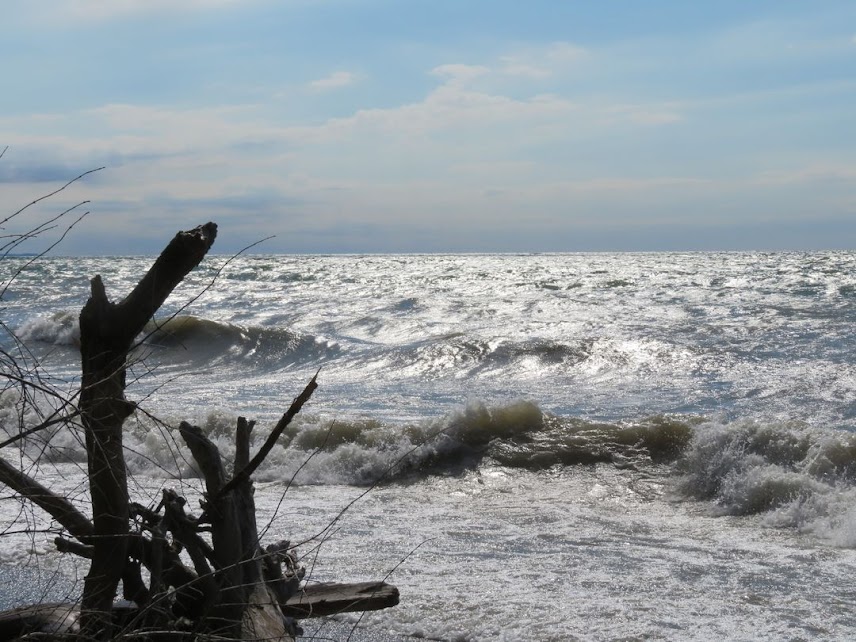
At the end of those gentle pastoral curves, the striking blue of that Great Lake Ontario rises into view. The watery horizon fills half the sky, baffling the onlooker as to why the water doesn’t rush back onto the land in front of them. Scientists would probably attribute this phenomenon to either the curvature of the earth, atmospheric refraction, or optical illusion of scale. None of which matters more than the fact that it is sure to elicit a gasp from anyone seeing it for the first time.
Though I grew up but a few miles from the lake, this imposing view – replicated in other areas along the coastline– still impresses me. Perhaps it’s because my parents treated each visit to that vast waterbody as a spectacle to be anticipated, greeted with joy, and reverently contemplated. “Watch for the lake!” they would instruct just before it came into view. “Wow!” one of us kids would say breathlessly. “It’s beautiful today,” another would exclaim. Then, after hunting for just the right spot, my parents would stand and gaze lovingly across the lake, as if to teach their new generation of ducklings the importance of water.
On any given day, in fair weather or foul, a sea of people—some in cars, others on foot—lined the shore, seeking solace in the spiritual bosom of that inland sea. If that’s too dreamy a description, consider my brother’s more analytical observation that such gatherings are simply a minor variation on fruit flies lining the rim of a glass, gazing into the grape juice.
Herman Melville described the “water-gazers” in his magnum opus, Moby Dick:
“But look! here come more crowds, pacing straight for the water, and seemingly bound for a dive. Strange! Nothing will content them but the extremest limit of the land … They must get just as nigh the water as they possibly can without falling in. And there they stand–miles of them–leagues. Inlanders all … Yet here they all unite.”
Everyone headed to the shoreline because summers on Lake Ontario had to make up for all the lake-effect snow and bitter winters. Perhaps that’s why my parents made sure we spent every moment of warm sunshine immersed in nature.
At the lake, my mother cautioned us to steer clear of the bluffs when lightning loomed, while my father taught us to scan the sky for sudden storms. I can still feel my body adapting to Ontario’s icy waters, bobbing in the buoyant waves, and pretending there was nothing else in the world except the water and me.
Eventually, I’d splash my way out and race across the hot sand to waiting lounge chairs and warm beach towels. Let anyone claim there were more breathtaking beaches or satisfying vistas anywhere in the world, and I would challenge them to a duel.
Majestic Bluffs lent to the stunning views. Technically, a ‘bluff‘ refers to a topographic feature, such as a cliff or embankment, rising more than 25 feet above the high-water level.
In New York, the bluffs are formed from eroding drumlins – teardrop-shaped hills of rock, sand and clay left behind by retreating, or melting, glaciers.
The Finger Lakes region of Upstate New York is arguably the best place in the world to see those rare glacial formations called drumlins. If you’re touring the enchanted Finger Lakes and drive straight north to the southern shore of Lake Ontario, you’ll gain a better understanding of what a bluff is. Research shows the drumlins even continue underneath the lake, in the area known as the Rochester Basin.
On the northern shore of Lake Ontario near Toronto, Canada, you’ll find the Scarborough Bluffs that some compare to the White Cliffs of Dover. The American side boasts its own magnificent displays, however, like the otherworldly Chimney Bluffs State Park with its towering, rugged spires and pinnacles of glacial till. Not to be outdone are the bluffs at Sodus Point, the Braddock Bay, and Hamlin and Fair Haven Beach State Parks.
To fully appreciate the geological wonders of the region, one must witness the dramatic interplay of land and sky, when the bluffs not only frame the landscape but also set the stage for unforgettable sunsets.
As the sun drops toward the water, familiar exclamations echo across the generations: “It’s going to be good tonight,” “Hurry, the sun’s almost gone,” and finally “There it goes!” as the sun slips below the horizon, ushering in civil twilight. Sunsets are God’s way of bringing people together, and it’s been working for thousands of years.
The name Ontario, derived from an Iroquoian word for “sparkling water,” is vividly affirmed by the breathtaking view from atop the Oswego West Pierhead Lighthouse, where sunlight scatters across the lake’s surface like a shimmering blanket of diamonds.
Many other lighthouses grace Lake Ontario’s shoreline, from the westernmost Fort Niagara Lighthouse to Tibbetts Point Lighthouse in Cape Vincent, NY – here the Great Lakes reverently pass their waters on to the St. Lawrence River in their eternal quest for the ocean.
These Great Lakes, along with their connecting waterways, form the largest fresh surface water system on Earth, with the majestic Niagara Falls serving as its crowning jewel.
Niagara Falls’ true grandeur lies not only in its towering height, relentless torrents of water, or awe-inspiring power. What makes it truly extraordinary is the monumental union of four Great Lakes—Superior, Michigan, Huron, and Erie. They channel their collective might over the falls, down the Niagara River, and into the final embrace of Lake Ontario, a breathtaking display of nature’s unity and strength. As French author and historian Alexis de Tocqueville wrote in 1831, “[N]othing prepares one for the spectacle.”
Last year, a portion of Lake Ontario off the New York lakeshore was designated a National Marine Sanctuary by the National Oceanic and Atmospheric Administration (NOAA). Their website notes that “Forgotten shipwrecks and archaeological resources, hidden in these cold fresh waters, are among the best preserved in the world, offering a chance to learn, share, and connect to the past.”
Though celebrated in song, immortalized in poetry, chronicled by historians and honored with a national designation, Lake Ontario will always just be the BFF I grew up with. Standing on the bluffs, with the breeze blowing and waves crashing, it speaks to each water-gazer personally and profoundly – beckoning them back, no matter how many years pass, or how far away they roam.
Originally published at The Epoch Times: