Christmas in “Bedford Falls”: The Town That’s Preserving ‘It’s a Wonderful Life’
By Susan D. Harris
The older one grows, the more profoundly it resonates—that’s the best way to describe “It’s a Wonderful Life.” Frank Capra’s timeless masterpiece tells a bittersweet, deeply cathartic story that draws fans back year after year, especially at Christmastime. It holds an enduring place in our hearts because it accurately reflects the emotional impact of the holiday season—when soaring expectations rise and fall, putting our lives into clearer perspective.
For those who’ve never seen it, the plot centers on a kind-hearted man named George Bailey (played by Jimmy Stewart), who grew up in the fictional small town of Bedford Falls. When a bizarre set of circumstances force him to contemplate suicide on Christmas Eve, his guardian angel intervenes, revealing what his town—and the lives in it—would have become without him. It boldly explores the profound impact of one ordinary life on those around it. Through an alternate reality sequence, George literally gets to see what the world would have looked like if he’d gotten his wish and never been born.
The movie is unique in that different scenes speak to you at different times in your life. From the youthful longing to escape your hometown, to the midlife pain of unfulfilled dreams, to the quiet gratitude for a flawed life—it whispers, “You understand now, don’t you?” Herein lies its universal appeal.
The Tale of the Two ‘Falls’
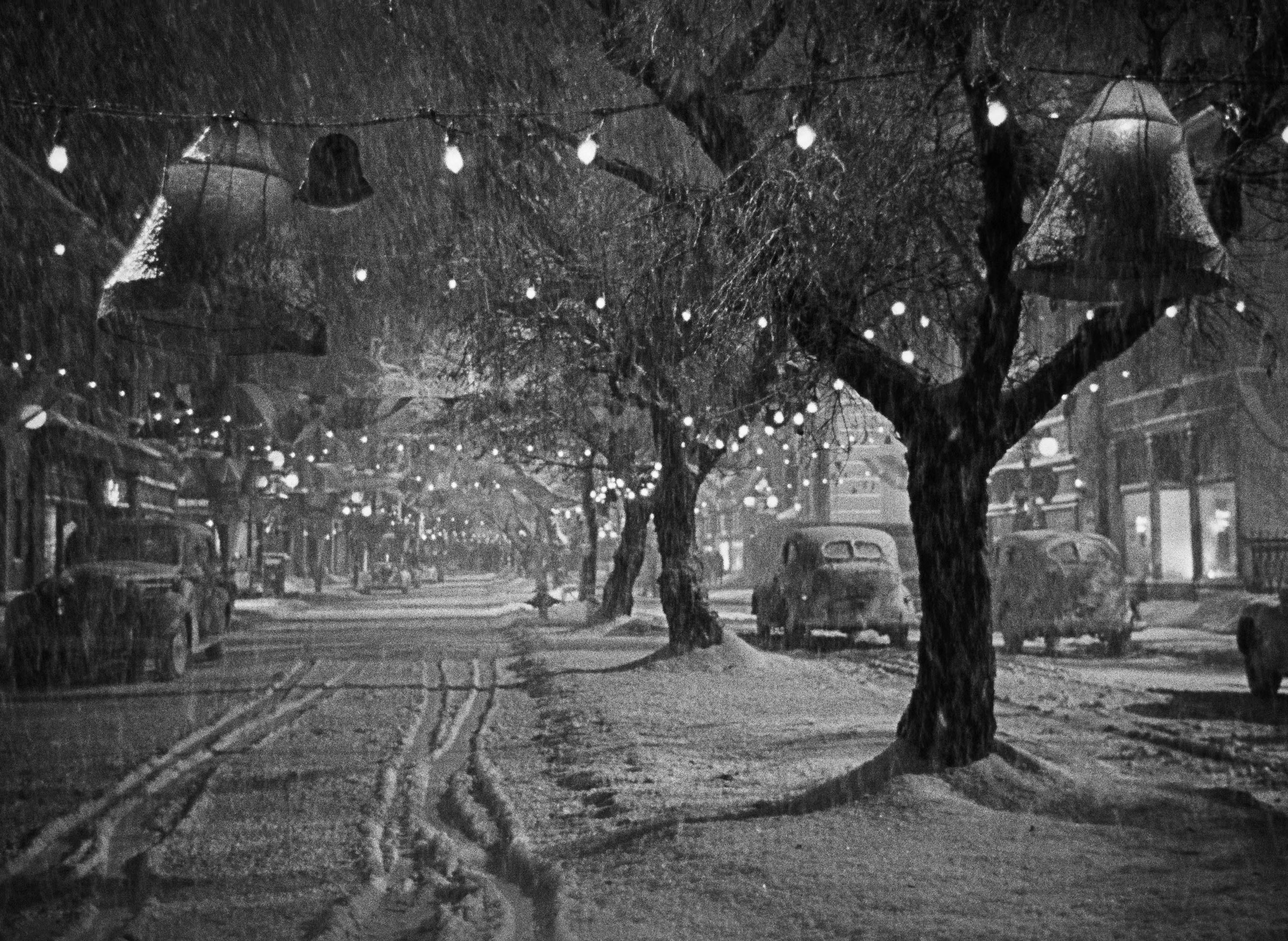
It’s the reason that thousands of people descend on Seneca Falls, NY year after year to attend the town’s annual “It’s a Wonderful Life” festival. They want to stand on the steel bridge where George Bailey faced his darkest moment. They want to see the Victorian homes like the one George and his wife Mary (played by Donna Reed) renovated. They want to feel the close-knit camaraderie of small-town America and walk its bustling Christmas streets. Every year, Seneca Falls assumes the identity of Bedford Falls … because it is Bedford Falls.
It’s true that the film’s director, Frank Capra, never mentioned Seneca Falls by name. As a matter of fact, he reportedly said that his inspiration was a “collection of many small little towns” in America. Yet residents of Seneca Falls present some persuasive evidence to make the case for being the inspiration behind the fictional town.
The script for “It’s a Wonderful Life” begins with the direction: “Series of shots of various streets and buildings in the town of Bedford Falls, somewhere in New York State…” That’s clue #1.
Nestled in the Finger Lakes region of Upstate New York, Seneca Falls shares striking historical, architectural, geographic, and other parallels with the film’s setting and storyline.
For instance, locals point to Frank Capra’s alleged 1945 visit as a key reason they believe Seneca Falls inspired Bedford Falls. At that time, with the film loosely adapted from a short story, Capra and his writers were in the early screenplay stages, fleshing out the plotline to create a full-length movie.
A Hollywood Director in a Small Town
As the story goes, Capra passed through Seneca Falls on his way to visit an aunt who lived in a nearby town. While there, he stopped for a haircut at the local barber shop. Barber Tommy Bellissima recalled meeting a man who introduced himself as Frank Capra, and said they shared a laugh as they joked about their names—Bellissima means “beautiful” in Italian, while Capra means “goat.” A website associated with the town reveals that Bellissima “didn’t know who Frank Capra was at the time, but when the movie came out, he recognized the name of his famous patron on the poster. He remembered Capra because the two had talked at length about their lives in Italy and common experiences as immigrants.”
The Heroic Rescue and Real-Life Stories
After leaving the shop, Capra would have continued toward the main route, driving over the steel truss bridge that spans the Seneca River (part of the Erie Canal system). He likely would have noticed the bronze plaque on that bridge commemorating a piece of local history: In April 1917, Seneca Falls resident Antonio Varacalli dove into the frigid waters to rescue a young woman who had attempted suicide by jumping from the bridge. While Varacalli was able to hoist her to safety, he was overcome with fatigue and perished. His body was pulled from the river two hours later. The plaque, still displayed on the bridge to this day, reads “Here April 12, 1917 Antonio Varacalli gave his life to save another. He honored the community. The community honors him.”
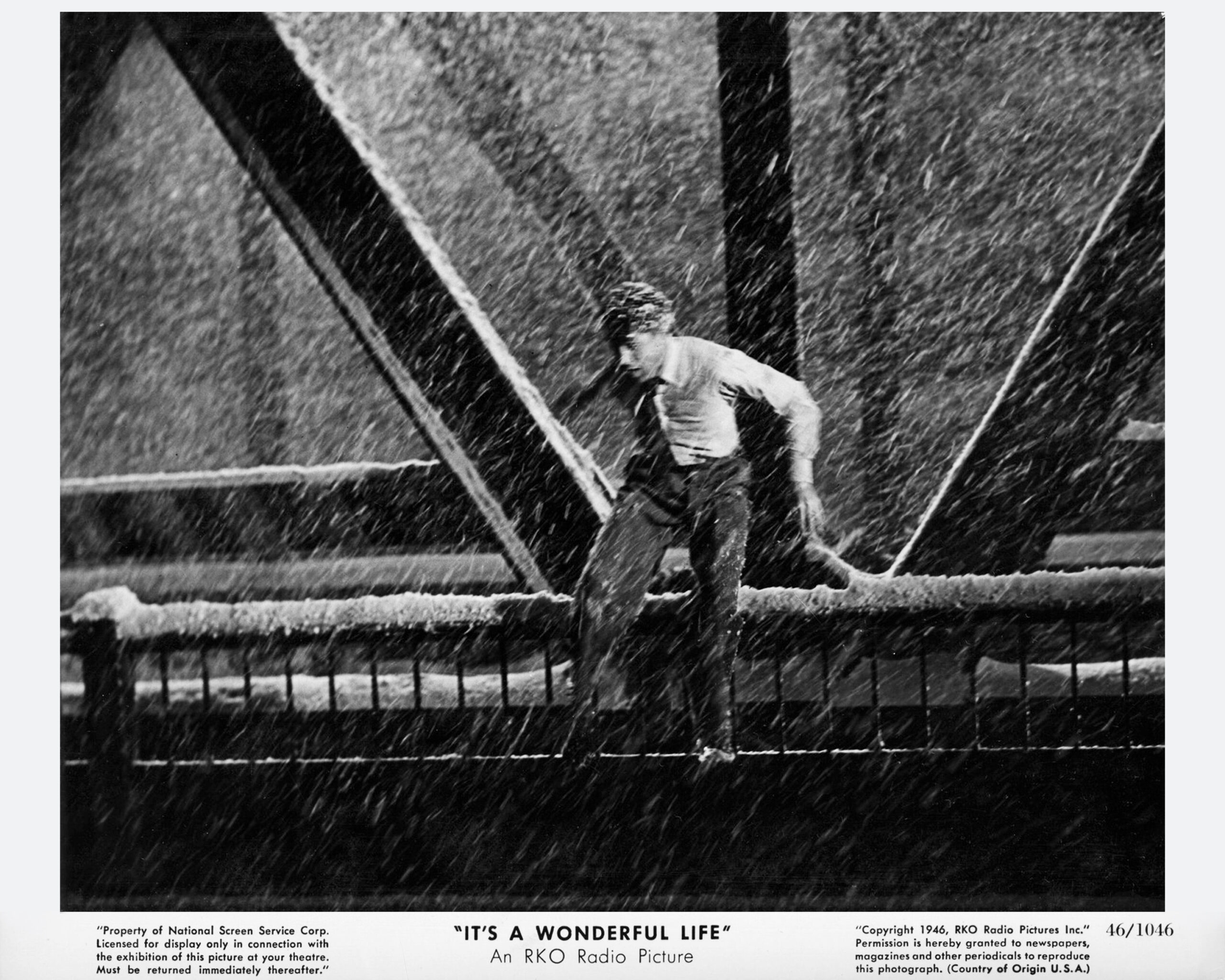
Fans of the movie will immediately recognize the similarities to an iconic scene: George Bailey is standing on a nearly identical steel truss bridge contemplating suicide when he sees a man flailing in the water. Instead of taking his own life, he jumps in to save another.
Researching details behind the true story, Finger Lakes Times writer Jonathan Monfiletto found evidence that the real-life incident may have also inspired other parts of “It’s a Wonderful Life.”
The fated hero, Antonio Varacalli, was a recent Italian immigrant working on the Barge Canal and living with his father, Domenico, just minutes from the bridge.
In a remarkable show of community compassion, the town raised enough money to bring Antonio’s mother and sisters from Italy to join his grieving father. And what became of the young woman he plucked from the water? Her name was Ruth Dunham. Two years later, she married a man named George, moved to Washington, D.C., and lived a long, full life—passing away at age 83, leaving behind three grandchildren.
As far as the movie goes: From the housewarming scene in Bailey Park for an Italian immigrant family to the final scene of a town rallying around one man in trouble—you can’t help but smile at the coincidences.
Considering the geographic parallels, there’s no denying that the places mentioned in the movie fit with the location of Seneca Falls. George Bailey refers to his sister-in-law’s father owning a glass factory in Buffalo. His friend Sam Wainwright wants to build a soybean processing plant in Rochester, and the bank examiner wants to get back to Elmira for Christmas Eve. A website associated with the town claims that a reference to Cornell University, in nearby Ithaca, was removed over concerns with legal issues.
A Festival, A Museum, and the Importance of Ordinary Life
You can find more information on the similarities between Seneca Falls and Bedford Falls on the It’s a Wonderful Life Museum website. The museum is located on the main street, and showcases personal items donated by cast members from the original film. The museum is actively undergoing a major expansion and renovation project, partially funded through crowdfunding and public donations.
One of its most dedicated patrons has been Karolyn Grimes, who portrayed George and Mary Bailey’s daughter, Zuzu, in the movie. Zuzu’s character played a major part in the plot of the film. In one scene, George stuffs the petals from her wilting flower in his pocket. When George is granted his wish that he’d never been born, the petals disappear; their reappearance later in the film fills him with joy as he realizes both he and Zuzu are still alive.
Grimes character is also featured in the film’s iconic ending. As Jimmy Stewart holds her in his arms, she delivers the famous line: “Look, Daddy. Teacher says, every time a bell rings, an angel gets his wings.”
Grimes has been an instrumental part in helping Seneca Falls embrace it’s inner Bedford Falls. She visits the town every year for their festival, and says it feels like coming home: “I have returned to the community of Seneca Falls every year since 2002 … As the years have gone by and my collection of memorabilia has grown, I wanted to share it with the fans of the film. From donations and lots of heart and hard work, our dream happened because of faith.”
In a world that often feels hurried and divided, Capra’s masterpiece—and the town that embraces it—reminds us that a single act of kindness can ripple through time itself. As the bells ring again this year in the cinematic Bedford Falls and its real-life counterpart, they carry the quiet promise that every ordinary life matters more than we know.

Christmas in Bedford Falls: The Town That’s Preserving ‘It’s a Wonderful Life’ | The Epoch Times